

When Country calls: two women, two journeys, one shared purpose
For 50 years, NAIDOC Week has celebrated the strength, resilience and achievements of Aboriginal and Torres Strait Islander people. This year’s milestone is an opportunity to reflect on the people whose vision, courage and quiet determination have shaped the path for those who follow, and those who are carrying that legacy forward for future generations.
Written by Mishalia Bird, adapted by WISA with permission
That same spirit is at the heart of the Great Barrier Reef Traditional Owner Taskforce (ReefTO), which comprises FRDC Board Member Manuwuri Forester who acts as Co-Chair, and Indigenous Reference Group Committee Member Cass Hunter. Building on more than three decades of advocacy by Traditional Owner Elders, the Taskforce is helping bring to life a long-held vision for a united reef-wide Alliance to care for Sea Country. This work highlights the immense value Aboriginal and Torres Strait Islander women bring to the seafood industry through cultural knowledge, leadership, custodianship and deep connection to Country.
For Manuwuri and Cass, caring for Country is not simply the work they do - it's who they are. Their journeys have taken different paths, but both have been guided by the same purpose: to honour those who came before them and leave Country stronger for those still to come.
Before Cass had the words Caring for Country, she simply knew she wanted to protect the environment.
Before Manuwuri understood where she belonged, Country already knew.
The first time Manuwuri stepped onto Lama Lama Country after reconnecting with her family, after generations of separation caused by the Stolen Generations, something shifted.
“I had this sensation where I felt hollow in my chest, and then it just disappeared,” she recalled.
“I turned to my husband Shane and said, ‘I think I’m on my Country.’ My uncle Sunlight Bassani said, ‘Yeah, we’re on Lama Lama Country now.’ I knew in my head that people were connected to Country, but that was the first time I felt it in my heart.”
That moment became her anchor.
For Cass, there was no single defining moment, but a lifetime of small ones. As a child, she dreamed of becoming a ranger because protecting the environment felt instinctive. Over time, she realised that caring for Country was never about acting first.
It was about listening.
“I realised I needed to listen before I could protect. You observe. You understand the patterns. You ask questions. You listen to the environment first.”
Although their paths could not be more different, both women have arrived at the same place: dedicating their lives to caring for Country and ensuring the generations who follow inherit something stronger than they did.
As NAIDOC celebrates 50 Years of Deadly, their stories remind us that every generation stands on the shoulders of those who came before.
For Cass, inspiration does not belong to one Elder or one mentor.
“There are many voices that shape me,” she said.
“Sometimes it’s hearing someone else’s story. Sometimes it’s sitting in a governance meeting. Every person you learn from helps create the headwind that keeps you moving forward.”
That collective wisdom has shaped her understanding of leadership, and challenged what leadership is often expected to look like.
“We come from a warrior race, but being a warrior doesn’t always mean being the loudest person at the front. A warrior can lead gently, with quiet determination. For me, the warrior spirit is about having the strength to keep moving forward, no matter what.
She believes that is what being “deadly” really means.
“Being deadly isn’t about being the loudest person in the room. It’s about persistence. You can lead from the back, support others and keep moving forward. You don’t have to be at the front to bring your style of being a warrior.”
For Cass, that quiet leadership is measured not by titles or recognition, but by the moments when people find the courage to have the conversations that matter most.
“The moments I’m most proud of in my career aren’t the easy ones,” she said.
“They’re the moments when people have the courage to talk about the things everyone knows are there, but no one wants to say out loud. People often talk about the elephant in the room as something to avoid. I see it differently. If we can bring those issues into the open and have honest conversations about them, we’ve taken an important step forward.”
Those moments, she says, do not happen by chance.
“You spend years building trust so that, when the time is right, people feel safe enough to have those conversations. They’re hard conversations, but they’re worth it. That’s where real progress begins.”
For Cass, caring for Country is not only about restoring landscapes or protecting Sea Country. It is also about creating the conditions for people to listen to one another. Because lasting change begins with trust.
That same philosophy has shaped her work advocating for Aboriginal and Torres Strait Islander knowledge to be recognised alongside Western science.
“For the first time, I saw our knowledge being respected alongside Western science. That wasn’t just important for me, it was important for all of us.”
For Manuwuri, leadership was shaped by something equally powerful: belonging.
Growing up disconnected from her Lama Lama family, she spent years working alongside Aboriginal people in Central Australia, learning from Elders and witnessing what strong cultural leadership looked like long before she returned home.
But it was only after reconnecting with her own Country that everything made sense.
“Before that day, I felt like I was floating around without an anchor,” she said.
“The minute I went onto my Country, I was grounded. I was connected to my people. I knew my place in the world.”
That sense of belonging transformed not only how she saw herself, but why she does this work.
Manuwuri Forester has spent her career breaking new ground, stepping into roles where Aboriginal leadership in environmental and marine management was still emerging.
Looking back, Manuwuri sees those many "firsts" not as personal achievements, but as signs that change was coming. While she helped open doors, she says her proudest achievement has been seeing young people walk through them, finding their own place in caring for Country and shaping its future.
“I want them to have a voice. I want them to do work on Country. We’re continuing the legacy of our old people while making space for those coming behind us.”
Like Cass, Manuwuri measures success by the opportunities she creates for others.
“When people love you, support you and your community stands behind you,” she reflected, “you can be fearless at the front.”
Now, her focus is firmly on the next generation.
“I’m doing my bit in the bigger picture,” she said.
“Now it’s about spending more time with young people, so they can take on the fight when we’re ready to step back.”
Cass shares that same hope.
She often thinks about her two sons, whose names symbolise wings and the freedom to find their own path.
“There will always be things that push against your headwind,” she said.
“My hope is that people find their own way to soar above.”
Fifty years of NAIDOC has been built on stories like theirs. Stories of resilience, quiet courage, cultural strength and leadership that does not always seek the spotlight.
Together, Cass Hunter and Manuwuri Forester remind us that caring for Country is ultimately about caring for people.
It is about listening before leading.
Finding strength in community.
Creating space for others to be heard.
And ensuring the next generation inherits not only healthy Country, but the confidence to answer when Country calls.
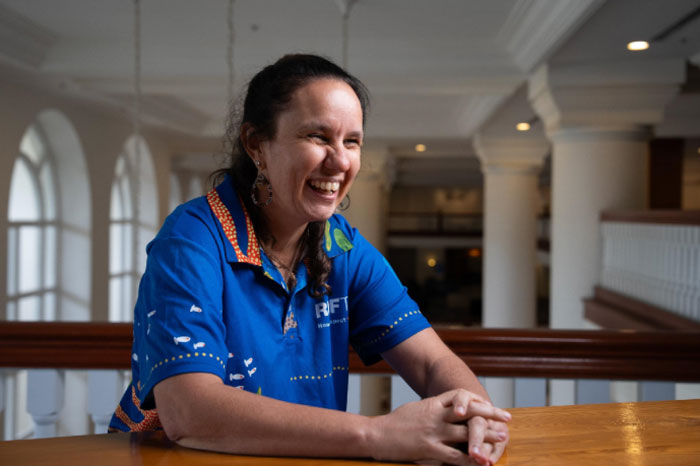
Dr. Cass Hunter
Kuku Yalanji and Maluiligal
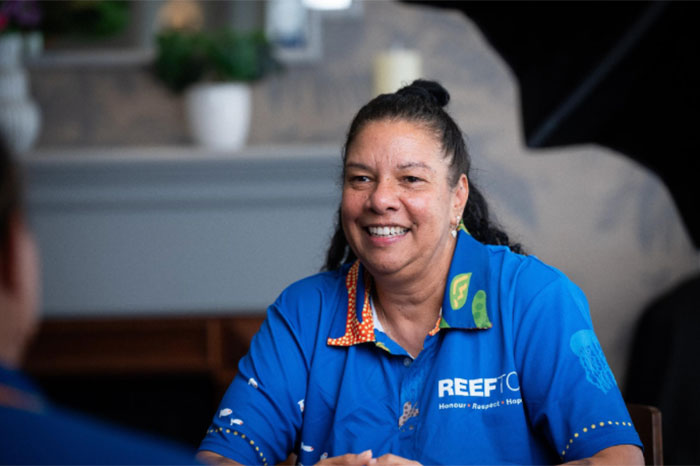
Manuwuri Forester
Lama Lama and Nywagi Co-Chair, ReefTO Taskforce
We are proud to collaborate with ReefTO, Australian Institute of Marine Science (AIMS), and Fisheries Research and Development Corporation (FRDC) to share the stories of two remarkable women whose journeys remind us that caring for Country takes many forms this NAIDOC Week.


Contact us
Jane Cowan - WISA Executive Officer
Email: hello@womeninseafood.org.au